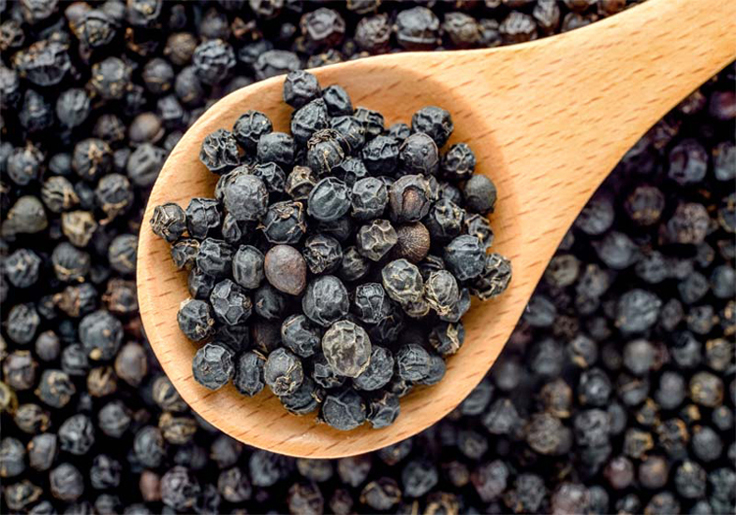
Black Pepper
Black pepper (Piper nigrum), often called the “king of spices,” is a flowering vine native to the Western Ghats of India, where its dried berries (peppercorns) have been used for thousands of years as a spice, preservative, and medicine. Its characteristic heat comes from piperine, a bioactive alkaloid that not only gives pepper its pungency but also enhances the bioavailability of other nutrients—most famously increasing curcumin absorption from turmeric. Black pepper is rich in volatile oils (such as limonene and pinene) that contribute to its aroma and may support digestion by stimulating gastric enzyme secretion. Historically, it played a major role in global trade, shaping ancient spice routes and even being used as currency in parts of Europe during the Middle Ages. Nutritionally, black pepper contains small amounts of vitamins (like vitamin K and C), minerals (iron and manganese), and antioxidants that help combat oxidative stress. Beyond culinary use, traditional systems like Ayurveda have valued black pepper for supporting metabolism, respiratory health, and appetite, making it a spice with both cultural and biological significance.
Health Benefits of Black Pepper